What to Sell on eBay: Fabric Yardage

Cuttin' it up.
The extent of my knowledge of sewing and fabric is this: 


That is to say, I know nothing of fabric, sewing, and notions. Heck, I'm even surprised the word "notions" in a sewing context is in my vocabulary. But there is one thing related to fabric that I do understand. Flipping that yardage for a profit.

In my ongoing quest to find items I can resell for extra cash in my spare time, no genre of item is ruled out. Some items aren't practical, some aren't worth the effort, and some I just don't know are valuable. But none are dismissed out of hand.

Case in point, a few years back I spy some neatly rolled fabric at a yard sale a while back. I'll be honest, the only reason even glanced at it is that is had pictures of Darth Vader on it. The day was late, my pickings thus far had been slim, and I was offered three different lengths of Star Wars material for a fiver.

I took a risk and bought the fabric, thinking that a worse case scenario would be my wife could maybe sew me up some pajamas (yes, I'm that cool). 

Fortunately, I took a little time researching the fabric and making a quick listing on eBay because...
The Force was strong with that one.
I write this not to brag about my good fortune (well... in addition to bragging about my good fortune), but to clue you in on another whole genre of flippable items just waiting to get picked. I still know very little about fabric, but I have since picked and flipped yardage of fabric several times with decent results.

The more you know off-hand about fabrics, the better equipped you are to find those perfect picks. So how does an idiot like me make it work? I often check the manufacturing info on the selvage. 
The selvage (or, in the UK, "selvedge") is the the edge of the fabric running lengthwise across the whole. On the bottom selvage is usually some information about, in the least, the manufacturer, the year, and name of the print.

Using this info alone, along with all measurements, a solid description, and plenty of good photos (it can be good to throw a ruler in there for relative size comparisons), you have got yourself a pretty solid listing.

Be honest about what you know (or how little you don't), be sure to mention any defects, and if that fabric smells funky, wash it first (also say that you washed it ). Trust me, if I can make some profits flipping fabric, anybody can.


Fresh Funds for Old Tools on eBay


Nothing makes me happier than finding out about some new item that I can find cheaply at thrift stores and garage sales that has big upside potential on eBay. So I get really happy on those occasions when I scratch the surface to discover a whole genre of inventory to pick.

Which brings us to Old Tools!
I'm not much of a handy man, I'm more of a 'beat-it-to-fit-paint-it-to-match' kind of guy. Therefore, I don't really know a quality coping saw from a busted-ass power drill. I wouldn't know valuable hand tools if they smashed my fingers, which they usually do. However, I do know who knows what's what in the tool department. That's right - the completed auction listings on my eBay smartphone app.

Man, all those years I was just passing by all those bins of hardware and tools... better late than never. And unlike books and vintage toys, the 'tools' inventory is not a viciously sought by every flipper in town, so there are a lot of deals out there for the grabbing. 

If you have storage considerations and a complete inability to repair motorized things like me, you're going to want to primarily focus on smaller hand tools. And my best picks thus far have been older tools in great condition. Small items like tape measures, wood planes and chisels, hand drills, and specialty tools for leather crafts and the like, have done real well for me. For example, here is a sweet tape measure I bought from the reuse center for $3 and sold for:
That says $29.50
I'm not averse to picking small power tools as well if the deal is sweet enough and I'm confident on what it will net me online. Most stores or sales will let you plug in a power tool to at least see if the if it seems to be running smooth. If you know what you are doing with it, go ahead and give it a full test when you get home and be sure to take photos for proof in your listing description. But if you're like me and using anything beyond a drill will likely result in lost digits, no sweat, just make sure to be honest with your listing and report that this tool has not been thoroughly tested. Some of these tools will still get you decent dollars even when being sold in "As-Is" or even "For Parts of Repair" condition.

I made over $100 for this power planer I picked-up for $10!

And, if you're really rugged, you can make some big profits flipping heavy duty tools like generators, air compressors, and tablesaws. These types of items are generally too big for easy, affordable shipping, so it might be Craigslist for those.

So get those gloves on and start digging in that crate of old nails and screws. There just might be some old gold in there.

Amazon Trade-In is your Friend


If you're are all up in the picking and flipping game, you are inevitably all up in the shipping game as well. Any online merchant worth his or her salt had better understand the costs and hassles of shipping. And you have better get yourself a pretty big stash of padded envelopes, adhesive labels, packing tape, and common sized boxes.

Sure, you can reuse old boxes and relabel old paddies here and there. But once you're shipping merchandise on the regular, you had better just bite the bullet and buy some supplies. You sure as hell don't want to be stuck paying full retail price for a last minute padded envelope at the post office or convenience store.

One of the best places to get cheap but effective shipping supplies sent directly to your home or office is right there on Amazon. Go ahead, do a quick search for #5 Padded Envelopes, or bulk packs of shipping tape. You aren't likely to beat those prices. And despite some frightening reviews, I've never had a problem with quality when buying generic supplies from a third-party merchant through Amazon.

And what's even better than buying discount boxes of boxes? Trading in picked books and media for 'em! Here is the short version of how it works:
Some popular items (books, dvds, and cds mostly) have trade-in value. To see if a book you are scanning has trade-in value, you need to use Amazon Student app (the regular app just doesn't give you these values). Just scan the barcode, and look for the extra value in green under the New & Used value. See:


So, in this example, you could list your recently bought copy of Science and Religion: A Historical Introduction for sale (the lowest competitive price is $6.40), or you can "Trade-In" your copy and get a guaranteed $4.59.

Basically, a "Trade-In" is a book that, if in Good or better condition, can be sold directly to a partner of Amazon. The best part is, they pay the shipping! And you can group all your Trade-Ins into one big package to ship all together.

The downside is that your Trade-In values are paid out in Amazon credit. This isn't much of a downside if you regularly shop through Amazon. And if you don't, you can use the Trade-In credit to stock up on shipping supplies, like we discussed at the beginning of this blog post.

A few things to keep in mind:
Not that many items have a lot of Trade-In value. And those that due usually have a value that is much, much less than what you could get from just selling the sucker. Examples like the one above a pretty rare. Even more rare, but certainly out there, are those anomalies that have the Trade-In value even higher than the lowest for sale price! If you find one of those bad boys, close the deal.

Also know that the Trade-In value listed on the item page on media items like CDs and DVDs are for New condition. The value for Like New and Good are usually much less. See the images below.


Another thing to remember is that the Trade-In value of an item can fluctuate (usually decreasing) over time. I used to save up a big box of Trade-In and then execute them all at once in one box, but even a few days in a holding pattern can reveal a huge drop in your potential credit. It's best to confirm and mail right away.

Lots of CDs have a Trade-In value of just 50 cents or so, but if you can get those cheaper, it is a guaranteed profit. No waiting to see if an item will sell, and no shipping costs to calculate (or mis-calculate). And I'll say it again, even if you don't want anything on Amazon, you likely will need to buy shipping supplies, so there you go!

Guest Post: Kathrine's eBay Store

This isn't Katherine... or is it?     It isn't.

I hope everybody out there is having a fun and productive time picking, flipping, finding deals and making friends. I know I've been having a blast and coming up on some decent scratch in the meanwhile. Best of all, I've gotten to know some real great folks out there as well as some real great folks on the net through this here blog. You all have some great stories and inspiring ideas. I've particularly shared some insightful emails with a fellow picker named Katherine. She was kind enough to write up her thoughts on eBay Stores for us, so here is our first ever Guest Blog on Part Time Picker:

I've been selling on eBay for so long it's become a way of life, and during those years I've seen many changes - some good, some bad, and some entirely unnecessary!

When eBay Stores first started I signed up enthusiastically, but within a few weeks closed my Store and went back to auction-style listings.  Why? Because back then stuff in Stores got no visibility.

If I remember correctly, Store items were tacked onto the tail end of all the auction listings. An insignificant link said something like See Matching Items in eBay Stores, so if you had a popular or common item, the odds of selling it out of your Store were somewhere between zero and a snowball's chance in hell.

So that was it for me. I ignored eBay Stores for years and discouraged anyone from opening one, for reasons that have now become obsolete.  Recently I've talked to a number of eBay Store owners who wouldn't sell any other way, so I investigated.

So what are the advantages of opening an eBay store?  
You can save money on listing fees – IF, and only if, you keep a minimum of 67 items listed all the time.  EBay's monthly fee for a basic store is $19.99 for a max of 150 listings.  For most non-store listings, you’re charged 30 cents. Multiply 67 x 30 cents and there’s your $19.99.  Pay by the year and it works out to $14.95 a month, an even better deal.

That means items you add to your store – from numbers 68 through 150 – are the equivalent of free to list. Cool beans.  Even better, final value fees (FVFs) are slightly lower with a store. In addition, you get a number of useful analytical and marketing tools and the ability to send newsletters to your subscribers.  You can also run sales if you need some fast cash or dump a bunch of dead stock and potential buyers can see that the price has been reduced.

Generally your listings run for 30 days, although you can opt for a shorter duration.  You could let your listing roll until sold (or you die), but I suggest that after 30 days you should change the main photo, adjust the price, and change the font and/or tweak the description. People will think it’s a brand new listing.
The other cool thing is, if you sell on Amazon, you could list your items in your eBay Store too. Some people shop for bargains exclusively through one or the other... why not get exposure to both? This, of course, won't work so well if you are using FBA.  

If you 'dual-list' with both Amazon and eBay you must be on the ball though to avoid complications from 'double exposure'. The instant something sells on one site, you’ll have to remove it from the other.  That means keeping your smart phone by the bed, if you get heavily into this – but what’s the chance something will sell on both sites at the same time?  Very little, but I hate tempting fate.  By the way, it's easier to cancel a sale on Amazon than it is on eBay, if that should ever happen.

Listing 150 items on eBay is very time-consuming, so if you have a mind to open an eBay store, start stocking up now. Don't do what a friend of mine did: open a store and list four items. Duh, that's a $5 listing fee per item, per month, fool.

In a recent interview on NPR, one of eBay's head honchos said that over 60% of listings are Buy It Now. The bidding novelty has worn off for many consumers. And besides, most people hunting for things on eBay want them NOW, so I haven’t run an auction-style listing in months.

I've sold a couple of 'local pick-up only' items too. There's an app people can use to find anything listed locally, and it can pay off. There are too many weirdos trawling Craigslist, so I don't mind paying eBay's FVF to get a serious buyer who has paid up front.


So maybe an eBay store would be right for you. With enough research, trial and error, and yes, even minor setbacks, you will find the right zone for your online business.  As they say: Nothing in life is to be feared, it is only to be understood.

Garage Sale Picking Tips and Tricks

You will need: Preparation, focus, and a thick pair of gloves.

Even in these rapid-fire days where everybody and their Grandma seem to be selling loot online, there are still amazing picks and good times out there. But no doubt about it, there is more competition now than just a few years ago, and it's going to get worse before it gets better.

I love a junk store, and give me a soda and some sunscreen and I could browse a flea market all day, but for my hard-earned time the best picks are always at the garage sales. Hands down. And by 'garage sales' I also mean 'yard sales' or 'tag sales'. Basically anywhere where amateurs are selling their extra possessions for cash.

Sure, you can just spot a garage sale as you're driving by, pull over, and browse. It's fun and friendly, but you are unlikely to walk away with a trunk full of gold for resale. You need strategy and you need skills. And a little luck won't hurt, either.

So here are some of the Part Time Picker's favorite tips and tricks for garage sale scores.
  • Plan where you are going to go - Once you have scoured the listings and decided on what spots you think will yield the best picks, get a map and make a plan. Keep in mind drive times and when and where you are going to get a bite to eat. 
  • Start early - The early bird gets the worm, so don't hit that snooze button on Garage Sale Picking Day. Some of these things start as early as 7am, so be there and caffeinated and ready to dig. While I think it is fine to get to a garage sale a few minutes before the official start time, some folks show up an hour early. Those people are known as "jerks" and you don't want to be associated with them.
  • Go late - The selection might not be as fresh, but you can rake in some big bulk deals (and even free stuff) by swooping in at the end.
  • Know how (and when) to haggle - I can (and will) write a much more in depth article on haggling techniques, but a few of my favorites are:
    • Carry small amounts of cash in each pocket - Something costs 7 bucks, and all you have is a fiver in your pocket? Sold. Nothing hurts your haggling game more than a fat knot of large bills.
    • Ask for the bulk deal or 'add ons' - Garage sale hosts are what we in the industry call "motivated sellers". They want this stuff to move. And the psychology of adding-on more items into the basket is often easier to swallow for them than asking for a discount.
    • Be friendly and smile - Seriously, being a nice person who politely asks for a deal is by far the most effective tool in your haggling kit. Even if you are going to try to argue your way into some savings by pointing out flaws in the merch and such, do it with a smile. 
  • Be discreet when you are researching stuff on your phone - While some folks don't care who is buying their goods, others can be pretty reluctant to sell to someone who has an obvious profit motive. By blatantly researching items on your phone, you are basically conveying that anything you are interested in purchasing could be sold for more than they are asking. 
  • Dig deep, open boxes, and look in drawers - Bring gloves and get dirty. There is some valuable, albeit dusty, stuff down in the depths. Don't be afraid to look inside everything. If it's in the sale zone, it's fair game.
  • Ask if there is more stuff inside or elsewhere - especially if you are arriving later in the day. Time and again I have had the really big score handed to me simply when I asked, "Is there, by chance, any more toys (or whatever) that haven't been put out yet?"
  • Bring your own bags and boxes - Don't count on there being bags or boxes available to hold all your loot. On more than one occasion I have purchased an entire bin of books only to have the seller tell me that they want to keep the bin. 
  • If a seller won't negotiate, give them your name and number - More recently than ever in the past, folks are overpricing their stuff at their garage sales. If this is the case and they won't listen to reason and charm, just give them your number and tell them to give you a call later in the day or tomorrow if they find they want to move their items. Once late afternoon rolls around and the crowds start to dwindle, some of these sellers will seriously reconsider your offer.
  • Stay hydrated - your body needs water so drink it. It might be a good idea to wear some sunscreen, too.
  • Have fun!

Gone Fishin': Selling Vintage Lures on eBay

I'll tell you everything I know about fishing.
Worms are gross, fish are slimy, fish hooks can hurt, boats make me nauseous, and you can easily purchase and eat tasty fish at a restaurant so I really don't need to fish if I don't want to.
Also, vintage fishing lures can sometimes sell for a lot of money online.

I once bought a tackle box full of old lures for ten bucks at a yard sale. It was stinky and dangerous and full of hooks and fishing line all tangled up. But at the bottom were a few old Heddon lures that I thought looked cool so I saved them for years and years. When I later started sorting all my junk and seeing what I could sell on eBay, I was delighted to find these things can reel in some decent dollars. 

Now, unfortunately I didn't have any of those ultra-rare lures that can catch you hundreds of dollars, but I put the bunch of them up on eBay and walked away with over 50 bucks. Since then, I've been careful to always check in any tackle boxes or tool boxes at every junk store or yard sale.


Another good tip to find antique fishing lures is whenever you see a fishing rod for sale, ask if there are any lures or tackle. Folks often keep the lures and hooks aside to make sure some kids doesn't accidentally get pierced.
Some brands of old lures that can be worth a bit include Heddon, Creek Chub, Shakespeare, South Bend, and Pflueger. There are also lots of smaller companies. And, of course, if the lures you snag aren't worth a ton individually, I recommend saving up a box of them to sell as a lot.


Books That Are Better for eBay than Amazon


The general principle for flipping books is pretty easy. Check your book values on Amazon and if you can make a decent profit from the picking, do just that thing. But there are exceptions to the Books-Get-Listed-On-Amazon rule. Occasionally, some books are better suited for eBay.

In general, eBay gives you a greater sales pitch opportunity for you items. With Amazon, you get to list condition and maybe add a sentence or two to describe the defects. Not much chance to make your item stand out. But with eBay, you can put up all the photos you want, throw down all kinds of related keywords, and smooth talk your way into a big sale. In exchange for this freedom to add flair, the process to get an item listed on eBay with all those enticements can take a significant amount of time. So what books are worthy of the time that it takes?

Antique and rare books: Some folks do quite well by selling there antique, collectible, rare, or autographed books on Amazon. For me, on the very rare occasion that I do I come up on an early edition or a signed copy of a popular book, I like the advantages that come with the auction format. Some quality photos of those classic illustrations or embossed cover can go a long way. A quality listing will stand out and perhaps net you a few extra impulse bids or purchases.

Books that are restricted by Amazon: Some books and movies are just straight-up blocked on Amazon, particularly if you aren't paying the $40 monthly charge to have a Pro-Merchant account. This happen most often with DVDs, and will happen even more in the future. And then there are all kinds of hurdles to selling collectible books or toys during the holidays and on and on. When I hit against this wall, I just slide those bad boys over to eBay and count my money. Those fees could have been yours, Amazon.

Weirdo art books and editions that aren't even on Amazon: Despite having over 20 million books listed on Amazon, I regularly find myself with an opportunity to pick some obscure art title or self-published monogram or zine that isn't in their database. Now, an obscure book is obscure all over, so don't expect eBay to perform miracles... but somehow these things have a way of finding their way to the right person when listed with proper connective keywords.

Lots of books on a similar subject: See the picture of those old Qabalah hardcovers up there. Two of them are available on Amazon for less then $7 each, and one of them isn't even on Amazon at all. Not really worth a pick. But the whole is worth more than the sum of the parts (or whatever that idiom is). Put them together with some tasty photos, some choice words in the subject line, and some mystical wording on Qabalah that I found with a quick online search, and someone was putting over $60 into my Paypal by the end of the week.
There is a really good blog post about selling themed lots of throwaway books on eBay over at FBA Mastery. Do not interpret my posting of this link as an endorsement for all those overpriced eBooks promoted on that site, however.

Amazon is still my go-to spot for selling books and movies. But it is not a bad idea to keep these eBay-book picking thoughts simmering on the back burner when your out there picking. Have a good time and feel free to let me know any thoughts you might have on books that belong on eBay.

Selling Books for a Penny... Now How Does That Work?


Go pick out a couple of books from the shelf that you have recently read or plan to read, scan them with your smartphone and favorite picking app, and observe the lowest 'Used' price on Amazon that other merchants are selling it for.

Yup. One cent. A lousy, measly, nearly-worthless penny! Now, why on earth would somebody sell a book on Amazon for only a cent? Aren't they losing money when you factor in the cost of picking the book and the Amazon fees? How could selling a book for a penny possibly make good business sense?

The short answer: Shipping charges... and lots of them.

I was once privileged enough to visit and get an inside look at the operation of one of these large Amazon sellers that deals in penny books. It was a huge warehouse full of shelves of books and DVDs with giant piles of mixed books and people with scanners scanning and sorting them and another room with people on computers listing them and another room for shipping. It was pretty impressive, but how is could an operation like this be sustained by penny books, I asked.

The math is actually quite simple. This operation buys books and media in bulk, and often can even get bulk books for free. I was told it costs an average of $100 for a palette of over 500 books and movies, sight unseen. So that averages to about twenty cents per book for the picking cost.

Now, a couple of these books are gold. It might be a rare occurrence, but all it takes is a few decent textbooks or artist monograms that can be sold for $20-30 each and the costs on the whole palette is recouped. When you're dealing in bulk like this, you only need, like, 5% of your books to be worth just a few dollars each and things can really start to get profitable. So even if two-thirds of the palette should be classified as 'penny books', enough profit is still generated from that other third to begin to cover the costs of storage and labor.

So, you're thinking, all those penny books are just the leftover chaff to be recycled. They're a liability, right? Nope, those penny books also generate profit not in the sale price, but in the leftover change from the difference between the shipping funds collected by Amazon and the actual shipping costs. And when you ship hundreds of books a day like this operation does, you can qualify for bulk shipping costs, which are much lower than even media mail.

We're talking actual shipping charges of about a buck per book. So even after Amazon fees and the costs of shipping materials like padded envelopes and labels, these penny books are bringing in a buck or two each. Do that several hundred times a day, add it to the bigger profits made from the sale of book and media that actually has value, throw in the occasional rare mega-valuable book, and you have yourself quite a thriving business.

This Amazon Forum thread about penny books from a few years back breaks down the math with some more detail, so give it a look if you still are scratching your head.

Obviously, selling books for a penny does not work for the Part Time Picker. A penny book operation requires cheap laborers, large warehouses, forklifts, and all kinds of crap I have no interest in dealing with. That doesn't sound like fun at all.

Sure, I'm happy to pocket the proceeds that come from the low costs of shipping a lightweight book, but I'm not about to base my livelihood on the principle. Don't get me wrong, I love penny books... love buying them, that is. (But then, of course, I'm paying the shipping charges too, so they are really $4 books, now aren't they.)

And since your so good at math there is no need for me to explain that books sold for a penny but using FBA results in nothing but a loss for the merchant. If you see someone selling a book for one cent with free FBA shipping, you should buy that book just to teach that idiot merchant a lesson.

Pick-tionary: BOLO - Be On the Look Out

BOLO: The acronym, not the tie.

If you spend any time perusing the internet for blogs and groups and comments about picking and flipping items on eBay and Amazon, you are no doubt going to be seeing the word BOLO being bandied about. What it means is Be On the Look Out. It originates from 1960s American Police jargon and is basically the same as an APB, or All Points Bulletin. But we're not out looking for crooks, we're looking for big picks with which to make decent dollars.

Personally, I'm not a big fan of the phrase BOLO. Maybe it's that I just don't like acronyms (although I was delighted to find that 'Scuba' is one). Perhaps the word reminds me of the hideous neckwear. Maybe seeing this phrase in all caps over and over again just gives me the willies. And, technically, shouldn't it be BOTLO? Either way, I hesitate to use it here at Part Time Picker. But I do want you to know all about it. Why?

Because when you are combing the net for picking blogs and comments and such and you come across somebody posting a BOLO, you should sit up and pay attention. BOLO posts are a great way to build your mental radar for potential picks.

The online community of eBay and Amazon sellers is very generous with sharing their tips and finds. They love to brag about the huge profit they just made on an unassuming item, as do I. While many BOLO posts are about very specific items that you may never find and shouldn't waste your time searching for, it never hurts to know. Heck, I even keep a notebook handy to keep a list of potential BOLO picks I may have otherwise overlooked.

Two Facebook groups I like to scan for BOLO posts and comments are Stay at Home Moms Selling on eBay (those moms make up a large demographic of picker blog interactions online) and Thrifting With The Boys, who have one of those preposterous cable shows that make everyone think they can get rich quick by picking antiques.

So, yeah, that's BOLO. 

The Color of Money: Selling PRISMACOLOR Pencils on eBay.

Color me slightly wealthier.

Here's an easy one that has been raking in side-cash for me for years now... big lots of colored pencils. But not just any old brand of colored pencils. I specifically seek out, pick, and flip Prismacolor pencils.

I find these things all the time and can usually get them for 10 cents each or even less. They are normally sold in sets 12, 24, 36, 64 or 132 originally (and also individually) and can be quite costly to get new at an art supply store. But, alas, once a few of the pencils from the set are used up or lost, the rest sit around a desk drawer for years. Once the long, slow path towards perceived uselessness is complete, they are donated to a thrift store or left in a box at a garage sale or just thrown away.

After all, who would want to spend a couple quarters on eight or nine random colored pencils? You, that's who! These suckers cost about $1.50 each new, and folks will usually pay nearly a buck each for them on eBay, particularly if offered as a large lot.

And they don't even have to be unused to fetch the dollars. As long as they are long enough (say, over 6 inches), they are a solid pick.

After flipping (and occasionally coloring pictures) these things for years, I finally got a bit curious about why Prismacolor pencils are made by different brands. So here is a little history: Prismacolor started in 1938 by the Eagle company, then changed name to Berol in 1969. It was bought by Empire in 1986 and finally by Sanford in 1995. Sanford is currently owned by Newell Rubbermaid, but the current Prismacolors have the Sanford name on them. In the UK and Canada they kept the Berol name until recently, and they were also called Karismacolor (and they have oak colored barrels rather than solid colors).
Update: The day this post published, I came across Scholar Prismacolors! So look for those as well.


I have had no problems mixing Prismacolors of all brands into a single lot. In my experience, a vintage Prismacolor with the Eagle name does not sell any better or worse than the others, so there is no need to separate them into a different lot. I also will include doubles (and triples or more) of colors in my lot. They do not all need to be different colors to be sold together.

There are currently 150 colors offered in the Prismacolor line. This isn't really relevant to them being flipped, but I just thought that was an interesting tidbit to share.

You will also find other types of art supplies with the Prismacolor name, such as watercolor pencils and markers. While I have had more picks of the straight-up color pencils, I don't see why these others things won't do well in a large lot if you can snag them on the cheap. Just make sure to test those markers, because they will dry up on you.

What I haven't done well with, however, is flipping lots of other brands of colored pencils. So leave those Prang and Crayolas alone.

So don't be afraid to get dirty digging in the pencil drawer. If there are other art supplies or inexpensive items that are pretty easy to collect in lots that you have had success picking and flipping, let me know in the comments. Have fun out there.

Feedback-pocalypse: eBay's new Detailed Seller Ratings

Everybody panic!

August 20th, 2014 has come and eBay's new Detailed Seller Ratings are in effect. What this means, and I'm still not entirely clear about it myself, is that all that the right to sell on eBay, and the benefits entitled wherein, can now be revoked or otherwise altered based on those five star ratings, which are now combined with regular old feedback to create the new "Transaction Defect Rate".

People seem really shocked and appalled in particular by the new requirement that eBay doesn't consider your packages shipped until the shipping service scans them in. So, basically, the seller is on the hook if the post office drops the ball.

A sampling of the 'blogosphere' shows reactions to this new evaluation / consequences system varying from rage-filled tirade-comments against eBay threatening to never use the service again (nothing new there) to utter relief that the sun did in fact rise this morning and we are still somehow free to sell junk online.

So how is your boy here at Part Time Picker reacting to all this? By not worrying about a damn thing. Here's why:
  • I always describe my items accurately and try to take multiple good photos. I do this because it helps get me more bids, more sales, and helps my items show up more often in searches within eBay's Cassini Search system
  • I don't gouge on the shipping charges. If I'm not doing Free Shipping, I keep those charges at or below what the actual costs will be. Nothing turns a buyer off faster than insane shipping charges. And in that very rare instance when I do accidentally overestimate and overcharge on shipping, I refund the overage to the buyer right away, even if they don't ask for it.
  • I usually ship the next day after the auction ends (or the item is bought). Why wait?
  • I also always get tracking on my shipments. Always.
  • I respond to all inquiries, questions, and other contact the same day, usually right away if I can. I don't like having some unresolved issue hanging over my head. And with my smart phone, it is super easy to respond from wherever I am. If you don't have a smartphone, you should just stop reading this and go back to gathering nuts and berries to store in your cave because the winter is coming.
  • I generally give great service. It's called being good at business and everybody should be doing it. It's how you get repeat customers. It's how you succeed. 
If you are already doing a good job at communication, item description, and shipping (which you should have been doing all along), you don't need to do a thing in regards to eBay's Transaction Defect Rate. Just be cool and keep picking the deals. Sure you'll occasionally get screwed by the post office or some idiot buyer who just gives you an unjustified bad rating, but, take a deep breath, everything will be ok. I promise.

There is a pretty good and even tempered blog about all the DSR controversy over at FlippingaDollar.com that you might enjoy as well.

What to sell: Magazines

Come to Papa.

There they are: under the coffee table, cluttering the shelves, in the bathroom, on the mantle, in your bag, all over your office... magazines are all over the place. They have a very limited time-frame of usefulness and are basically designed to be read once and tossed.

I'm not going to tell you to hoard magazines. For for love of all things sacred get rid of your old magazines. But before you dump them all in the recycle bin, take an extra moment to see if they can get you a spot of cash on the 2nd-hand market.

And once you notice what magazines are selling on eBay, you can often pick them for next to nothing. After all, magazines are rightfully considered wasteful clutter pretty quickly.

So what magazines have value (other than that National Geographic of the girl with the haunted eyes)? With a bit of research, I've discovered there are lots of mags that can be flipped for bucks. Few magazines will get big dollars on their own, but if you are paying very little (or nothing) for them, you can make a few bucks of profit pretty easily.

  • First, the obvious. Vintage and antique magazines (and catalogs). While an old magazine is not guaranteed to fetch a high price, it is a good place to start. Make sure to take good photos and describe the contents in your listing. Many people are more interested in the images of celebrities or the advertisements in old magazines than the articles.
  • Specialized interest and industry magazines. These can often be very expensive new and not exactly common at the newsstand, so folks will buy them online. Whether the topic is dentistry or fly fishing, there are professionals and hobbyists who need that back issue.
  • Art magazines. Some of the more high-end art magazines have massive retail prices when new, but can later be found for a few coins at a garage sale or library clear-out. I have personally made a killing on several occasions reselling Raw Vision folk art magazines that I bought for only a dollar each.
  • High end Knitting Magazines. My wife loves these things but usually will just photocopy a few pages she likes and then pass them on to me to for online sale. Some of these issues sell for over $20 each!
  • Fashion and design magazines (or any magazines, really) from overseas. Again, these things have a hefty price tag when bought new at the newsstand in the US, but lose their value real quick afterwards.Same with UK music magazines like Mojo. 
  • Recent issues of magazines. I gleaned the knowledge of reselling recent issues of magazines from the Suzanne A. Wells blog. Sometimes issues from the past year can be resold for decent bucks. The celebrity on the cover is a big selling point for some of these so make sure to put their name in the subject of your listing. If your friends have a subscription, ask them if they will give you their issues when they are done rather than recycling them. 
  • Bulk Lots of magazines. And, of course, the classic. Any regular readers of this blog know that I don't like taking the time to list items that are only going to fetch me a buck or two in the end. That's why I'm a big fan of selling small profit items in lots. While I won't bat an eye at a magazine flip for $4, selling a lot of ten mags for $40 profit will get my blood pumping for sure.
A few other things to remember about picking and selling magazines:
  • Use the old standby of completed items eBay search to do quick research. Realize that you may not get the same results you see, particularly if there is a small sample size of completed listings.
  • Some specific magazine back issues can be sold through Amazon. Particularly for those giant 'book-sized' (and 'book-priced') magazines.
  • Ask your doctor, dentist, or other waiting room having professional if they are recycling their old magazines. If they are, maybe they will let you have them.
  • Magazines without a mailing label (or remnants of adhesive from a label) will get better dollars.
  • Magazines don't qualify as Media Mail (because they have advertisements in them), so set your shipping charges accordingly.
  • Magazines can always be put in the recycling bin later, so if you have a chance to get them for free, go for it. Free magazine issues are basically a no-risk pick. 
So there you have it. Keep you eyes open for possible magazine picks and you'll be padding up the paypal account in no time.


Relist for Success

Don't worry, just hit 'Relist', sit back, and relax

If there is one thing that season after season of finishing at the bottom of my fantasy baseball league standings has taught me, it is that past performance is no guarantee of future performance. What's true in make-believe sports team management is often true in selling on eBay. Just because something has sold for big bucks in previously completed eBay auctions, that doesn't promise a repeat performance. Fortunately, the opposite is also true.

This was illustrated pretty dramatically when I recently auctioned off pack after pack of unopened, but expired Polaroid 600 instant film. As I've posted about before, Polaroid film frequently fetches $20 per pack, so when I was listing a pack on eBay every week for 6 weeks in a row, I expected to have grossed around $120 bucks when all was said and done.

I started each auction at $9.50, a price I thought would be low enough to get a good deal of 'watchers', but high enough that I would still make a profit if it went for only the opening bid. Week One's auction closed at $22, right on target. But the next week the same pack of film only brought me $13. What gives?

Even more curious, no one bid on the film pack the next week. Not a single bid. Had the market for Polaroid film crashed? Was somebody else offering the same item much cheaper? Was my computer malfunctioning? I couldn't figure it out.

My head really started to spin when, the following week, that same pack that had not garnered one bid the previous week sold for $35! The remaining three packs of film sold for $18, $25, and $22.50 (averaging $22.58 for all six packs). So the prices I was fetching varied by over 20 bucks from week to week.

This statistics-filled tale is an illustration that prices can fluctuate without much reasoning. With that in mind, it is always best to set your listing price at a comfortable level, making sure you are assured the profit you need for that item. It is better to not sell an item than sell it for too little.

Sometimes items will sometimes go from no bids at all to a bidding war after a quick relist.

Similarly, items that don't seem to interest anybody in an auction format can sell like hotcakes with 'Buy It Now' pricing. Certainly there are a great deal of people who want to purchase that item right now and are willing to perhaps surpass a deal for the immediacy of a purchase guarantee. Some folks don't want to wait days to see if they may or may not have won an auction... they literally want to buy it now.

And I won't even begin to launch into the fact that certain items fetch much higher prices in different venues. I know several sellers who purchase vintage things on eBay just to turn around and flip them for profits on Etsy. Remind me to write about that later.

So don't be discouraged if nobody seems interested in your treasure. Click that 'Relist' button and be patient. Try a 'Buy It Now' price. Maybe change a few words in your subject line. Good things come to those who wait, so don't sell your pickings short.

Big Score: Yashica Film Cameras

Now that you're all keyed up from my recent post about how film cameras as prime-time Picking gold for a big-bucks eBay flip, let me share two of my recent 'Big Scores'.

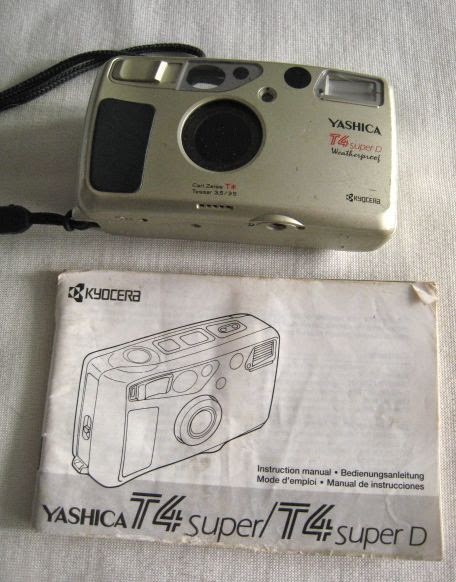
The Yashica T4. This looks like a crappy point-and-shoot camera that can't be worth very much. Well, how does $170 sound? That's right, the T4s (as well as T3s and T5s) fetch huge dollars on eBay. They are easy to spot because they have a viewfinding window on the top. If you see this camera, you get it!

I'm always juiced when I find an inexpensively priced medium format camera. These things are sought after by serious photographers. It isn't very common to find one priced on the low-end, but I was able to pick this Yashica Mat 124G up at a garage sale for $40. When all was said and done, it sold for over $150 in "As-Is" condition. Not bad. 

So, what kinds of big camera scores have you come across?

What to Sell: Film Cameras on eBay

35mm film cameras are dead.

Except, they're not. In fact, 35mm (as well as medium format and Polaroid) cameras are at the perfect place in history for you to make some big-time profits on.

1910 selfie by Harold Cazneau

It's true that the average consumer (and most professionals) have made the complete switch to digital photography. Heck, most folks forego cameras completely and just take pictures with their phones nowadays. But this doesn't mean that there is no market for quality film cameras. Lots of people are still shooting on film. There are whole artistic movements about shooting with film. These people want film and film cameras.

Now, the most folks are looking in their closets, seeing that old film camera that they haven't even considered using for a decade and think "This thing is worthless. Do they even make film anymore?". Oh boy! This is your big chance to exploit the gap between something being unpopular and without value to the average consumer, but still quite valuable in a specialized marketplace. Just like we discussed with Rapidograph pens, remember.

So how do you know which cameras are worth the big bucks? Just look it up on your phone, dummy. A quick eBay search of completed auctions can give you a guideline of average selling prices.

Now, there's somthing you need to contemplate before you start counting your money.
First, test the shutter, focus, glass, and film-advancing mechanisms. Even if those check-out, realize that unless you plan on shooting and processing a test roll of film, you are going to need to sell you cameras "As-Is", which will inevitable net you less dollars.

Alternately (and this is my preference), you can be very generous, understanding, and clear with your return policy, allowing the buyer enough time to shoot and develop their own roll of film. 30 days should be plenty. Sure, you may have to occasionally need to accept a return and eat-it on the shipping costs, but this has been surprisingly rare with me. Even better, the buyers who have purchased cameras that eventually were revealed to have light-leaks or something were so pleased with my full-refund policy that they left positive feedback.

not my photo

And why stop at cameras. I've made some great flips by picking lenses. accessories, and even unexposed (yet expired) film. Old 35mm cameras that are fully functional but no longer being used are all over the place.Go out and get em.

Stay tuned for my next Part Time Picker post where I share a few of my favorite big camera scores.

The Picking Roadtrip


No doubt about it, Picking is popular. Television shows such as Antiques Roadshow, American Pickers, and Storage Locker Idiots have taken the once obscure hobby of 'thrifting' and turned us into a nation of treasure hunters and wanna-be antique flippers.

As someone who has been in the picking game for a decades (admittedly more often for collecting junk than reselling it), I can tell you without a doubt that the big scores are getting harder to find. I live in a pretty large city and most thrift stores are bereft of super deals these days. Throw in the ease and popularity of reselling items on eBay and books and games on Amazon and it can seem like there isn't any good pickings to be had anymore.

It's great that anybody can make money picking and reselling items online. The bad news is that everybody is trying to make money picking and reselling items online. Competition is fierce. Especially in the densely populated, hip cities.

A possible solution, one that has been practiced for a long time by antiques dealers, is the Picking Roadtrip. The idea is simple enough: Head out to the small towns where the bumpkins don't care or know the value of what they've got, buy up all their good stuff, and head home to sell it at a tremendous profit. Sounds simple and fun, but is it a reality?

I know several vintage clothing boutique owners who have sustained successful business for many years using the Picking Roadtrip as their primary means of inventory acquisition, so clearly it can work. I asked them for some roadtrip picking pointers for this post, and here is what they clued me in on:
  • Have a plan and a budget. Randomly wandering the countryside looking for amazing deals is going to get frustrating but fast. The romantic notion of stumbling onto a barn full of affordable and resellable antiques is extremely improbable. Know where you are going to go, how much it will cost you (gas, accommodations, food), and what you are hoping to find.
  • Know what you want and what it's worth. Some folks don't take to kindly to you researching their goods on your fancy computer-phone right in front of them. You need to be prepared to buy items quickly when those deals show up.
  • Know how to haggle. If you are picking from garage sales, flea markets, and swap meets, you darn well need to be able to haggle. The ability to negotiate price can turn an ok deal into a big score.
  • If you are going with a friend, agree beforehand how you will be dividing goods. Roadtripping with a partner is great fun, but it can go sour real fast if one person thinks the other is not being fair. It's also a good idea to plan on how expenses and driving time is going to be divided.
  • Have a shipping plan. You may find more great stuff than you can cram into your car. It's a great problem to have, especially if you have a plan and budget to get those extra items back home.
  • Leave time to explore. Allocate time for those side-trips and wild goose chases. 
  • Have fun. Enjoy the trip and the experience of going to new places. You may very well come up empty handed, so you might as well have a great time.
Now, I, myself, have never taken a roadtrip with the sole intent of picking. However, I often make picking a part of any roadtrip or vacation. I simply love to visit junk stores, flea markets, and garage sales in new places. Some great deals can surprise you in unfamiliar turf, and often the pickings are much better in the smaller towns.

PS - I just learned about the Antique Road Trip video game, so there is that, too.

What to Sell on eBay: Lego MiniFigures

Mini-figures, big bucks.

Back in my day, we didn't have all these fancy Lego figures with expressions and haircuts and major motion picture relevance... we had one guy. He was all yellow and always smiled. He was either an astronaut, knight, pirate, or just a regular dude. But nowadays, there are thousands of different Lego men and women... and aliens, skeletons, monsters, celebrities, and just about any variation you can think of. Lego has become the best selling toy of all time and its popularity has exploded in recent years thanks in no small part to the expansion of those little people, known to collectors as Minifigs.

As of 2010, there were over 3600 different Minifigs, and over 4 billion have been manufactured. I imagine these numbers have risen dramatically in recent years, especially when you consider that these figures are popular enough to have their own major motion picture!

People are nuts for Lego out there, and you can make a tidy sum by picking Lego at local thrift stores and garage sales and reselling. It all sells, be it complete sets, bulk lots of bricks, weapons and accessories, or Minifigures. I know two local toy stores that sell bulk bags of bricks on consignment for over $10 a pound.

If you find Lego on the cheap (and make sure they are authentic Lego), buy it! There is a huge second-hand market for it. Almost every parent has accumulated a big plastic bin of loose Lego bricks for their kids, so once the children are grown and the toys are no longer being played with, they are often sold very cheaply at yard sales.

Your average Lego figure will sell on eBay for $1 - 4. Some specialty themed sets, like Lord of the Rings or Star Wars, can go for $5 - $12 each! Some rare figures with their accessories can fetch up to $100 and beyond.

As you know from my previous post on selling in lots, I'm not a big fan of getting only a buck or two on an eBay auction. I like to hoard a big bag of Minifigs to sell in a lot. If I am able to identify figures that go together in a certain set, I'll put them up together. Otherwise, I'll put them up in lots of anywhere from 20 to 60 figures at a time.

Make sure you take a lot of photos to go with your auction, and include the words "Minifig" and "Minifigure" in your title, as people might search for using one term or the other. As always, be honest about the condition of your items, and describe any missing hands or damaged figures. If your figures seem to consist of mismatched parts, no problem, just say so in the description.

I've probably sold several hundred Minifigs since I started picking. They're small and don't take up much storage room. They are also a great example of an item that is not terribly valuable on it's own, but worth a bundle when you can acquire enough to sell in bulk.

So keep an eye out for Lego, my friends. They are the building blocks to picking riches!

Apps for Picking and Reselling Books: iBookSeller


As I have written time and again, the essential ingredient of selecting books to resell on Amazon is using your smartphone to determine what is worth picking. You take the book off the shelf, you scan the barcode on the back, and you then determine if the book is likely to net you enough profit via resale on the Amazon marketplace.

The keystone is this whole interaction is a smartphone app that can quickly and clearly give you the information you need to make an informed purchase. There are several apps available, and in this blog post we will look at iBookSeller, from Shick Web Design, LLC.
First of all, let me be clear that I am in no way being compensated to endorse or review any product or service. Now that we have that cleared up, let's look at the app.

iBookSeller (version 2.2) is one of the most complete iPhone apps for scanning books. Once you scan a barcode (or manually enter the ISBN), it gives you a lot of information on a single page. Some of that more useful than others. The info I'm looking at is the Sales Rank (crucial), the New or Used Price (essential), and the number of copies currently listed for sale New and Used (in parenthesis after the price). I'm not as concerned about EAN and List Price, but those are there as well.

It also gives you an image of the book cover, which is convenient to confirm that you are, indeed, getting the proper info for the right book. I say this is convenient because several times the iBookSeller has given me info for the wrong book.
Let's take a look at a screenshot from my iPhone:


So there we have it. The above book has a decent Sales Rank, but a used copy is selling for only 55 cents, and there are more then 30 available. I would not pick this book. Someone with a tolerance for lower profit margins, who has more patience for this book to eventually sell at a decent price, or a who is a large seller that makes most of their profit from shipping charges might consider this book a buy. To each his own, but the app has given us all the critical info to make the call. Let's scan another:


Now that's more like it. A robust Sales Rank coming in at under 500k and a solid lowest available used price at $12.18. If I can purchase this book for a buck or two, you better believe I'm picking it.

Another useful feature on iBookSeller is a "Good Buy" settings system, where you can adjust the parameters of what you consider a book worth picking (Sales Rank, Price, Total Offers), and it will give you a quick green Thumbs Up or red Thumbs Down icon with every booked scan. This can really help if you need to scan a lot of books... You don't even have to interpret the data, just look for the thumbs up.

The phone's camera will activate your phone's LED light when the image is too dark to scan the barcode. This might be useful for when you are scanning books in a dank basement during an estate sale or something.

And a easily overlooked feature I really like is that a numerical keypad pops up when you are manually entering ISBN numbers. This is much more convenient that hitting the tiny numbers on the alphabetical pad. Although you do have to return to the alphabet keyboard screen to hit the "Go" button to get the data.


Other sometimes useful tidbits are a button to quickly punch-up the book's listing on Amazon's mobile website and a History page that allows you to see the titles you've already scanned. That's a lot of useful stuff coming from one quick scan.

iBookSeller comes with a 4-page eBook titled "Make Money with Amazon.com Marketplace". Not a bad primer on picking and selling books, but there is no information in here that you wouldn't already know before you purchased the app.

And speaking of purchasing the app... you need to purchase the app, because it isn't free. It originally cost me 99 cents, plus an addition $1.99 to use the scanner. However, as of this blog post, is costs $4.99, plus another $1.99 for the scanner. You'll need to buy the scanner, and it's a good scanner, but it is a 'hidden cost'. All said and done, the iBookSeller app will cost you $7! Pretty steep, as far as apps go.

Other than the cost, about the only other shortcoming of this app is the inability to give you a Amazon Trade-In values. The only app I know that does that is the Amazon Student app (which is free).

In summary, iBookSeller isn't perfect, but is probably the best book picking app available at the moment. If you have used this app, or others, let me hear your opinion in the comments.

Going Postal: How to Avoid the Post Office

Sorry for the long silence, now back to the show...

Stories abound about the United States' dysfunctional Postal Service and about how, at the rate they are going, they won't be around much longer. I heard they are stopping Saturday deliveries of everything except packages (a plan now put on hold), and rural branches are getting shuttered all the time. A little research reveals that the problems are much larger than any incidences of rude service, confusing changes in stamp values, and the mail carrier who somehow never gets it right. It has also been suggested that many of the USPS's woes are intentionally being escalated in an attempt to have the organization forced into massive bankruptcy, which would both eliminate current pensions and completely privatize the service. It has come to light that the spouses of US Senators have been given exclusive rights to sell USPS property. Corruption, anyone?

Is it email or ridiculous and unrealistic retirement plans? Or is most of what we are hearing misinformation? Or is it all about real estate? [If you haven't visited a blog in the past decade, when a group of words are underlined, that means they are a link you can click on.]

Now, don't get me wrong. I love the USPS. I think it is an amazing and quite affordable service when you consider just how much they do for you, and have done for you for your entire life. It really is amazing that you can send a letter to anybody, anywhere, no matter how cutty and out of the way they reside, for less than half a buck. Imagine you had to hand delivery all your packages.
Regardless of the reasons behind the troubles at the Postal Service, I sure hope they stick around, because my Part Time Picking business relies on them. Think about it... mail rules!

But visiting the Post Office does not rule. Visiting the local Post Office sucks! Lines are long, most customers are confused and angry, and most USPS representatives are pretty grumpy (the inevitable result of constantly having to ask confused, angry customers if their packages "contain anything fragile, perishable, or potentially hazardous").

Well, if you're shipping more than a few items a month, I would recommend considering an online postage service. You can buy shipping direct from Paypal, Amazon, and the USPS these days, although there are some limitations on what services you can use. The last time I checked, you couldn't ship Media Mail rate with USPS online. For myself, after a bit of research and a few particularly frustrating visits to my local post office, I decided to give stamps.com a try.

Stamps.com will cost you about $16 a month for their minimum service, but when you consider the hours saved by not waiting in line at the post office, I think it is worth the cost. You just enter the weight and dimensions of your package (or padded envelope), where its going, and by what service, plus any add-ons (tracking), and print your postage right at home. Apparently you can schedule a pick-up from your postal carrier, but I prefer to just drop off my stack at the local post office.

I trust you already have a computer, so the only other supplies you'll need are a scale and a big stack of labels. I prefer affordable generic 1/2 sheet labels that feed right into my laser printer. It's easy to copy and paste the tracking numbers into Amazon or eBay, and stamps.com keeps your shipping history if you need to look up info on a late package. One of the only drawbacks is that international shipping, with its customs forms, is still more reliable through actual human transaction.

There are other online postage services services available, and the costs and terms are always changing, so do a little research of your own. You may find that printing shipping at home is worth it just for the envious looks on the faces of those suckers who are still waiting in line at the post office.