Showing posts with label amazon. Show all posts

Amazon Trade-In is your Friend


If you're are all up in the picking and flipping game, you are inevitably all up in the shipping game as well. Any online merchant worth his or her salt had better understand the costs and hassles of shipping. And you have better get yourself a pretty big stash of padded envelopes, adhesive labels, packing tape, and common sized boxes.

Sure, you can reuse old boxes and relabel old paddies here and there. But once you're shipping merchandise on the regular, you had better just bite the bullet and buy some supplies. You sure as hell don't want to be stuck paying full retail price for a last minute padded envelope at the post office or convenience store.

One of the best places to get cheap but effective shipping supplies sent directly to your home or office is right there on Amazon. Go ahead, do a quick search for #5 Padded Envelopes, or bulk packs of shipping tape. You aren't likely to beat those prices. And despite some frightening reviews, I've never had a problem with quality when buying generic supplies from a third-party merchant through Amazon.

And what's even better than buying discount boxes of boxes? Trading in picked books and media for 'em! Here is the short version of how it works:
Some popular items (books, dvds, and cds mostly) have trade-in value. To see if a book you are scanning has trade-in value, you need to use Amazon Student app (the regular app just doesn't give you these values). Just scan the barcode, and look for the extra value in green under the New & Used value. See:


So, in this example, you could list your recently bought copy of Science and Religion: A Historical Introduction for sale (the lowest competitive price is $6.40), or you can "Trade-In" your copy and get a guaranteed $4.59.

Basically, a "Trade-In" is a book that, if in Good or better condition, can be sold directly to a partner of Amazon. The best part is, they pay the shipping! And you can group all your Trade-Ins into one big package to ship all together.

The downside is that your Trade-In values are paid out in Amazon credit. This isn't much of a downside if you regularly shop through Amazon. And if you don't, you can use the Trade-In credit to stock up on shipping supplies, like we discussed at the beginning of this blog post.

A few things to keep in mind:
Not that many items have a lot of Trade-In value. And those that due usually have a value that is much, much less than what you could get from just selling the sucker. Examples like the one above a pretty rare. Even more rare, but certainly out there, are those anomalies that have the Trade-In value even higher than the lowest for sale price! If you find one of those bad boys, close the deal.

Also know that the Trade-In value listed on the item page on media items like CDs and DVDs are for New condition. The value for Like New and Good are usually much less. See the images below.


Another thing to remember is that the Trade-In value of an item can fluctuate (usually decreasing) over time. I used to save up a big box of Trade-In and then execute them all at once in one box, but even a few days in a holding pattern can reveal a huge drop in your potential credit. It's best to confirm and mail right away.

Lots of CDs have a Trade-In value of just 50 cents or so, but if you can get those cheaper, it is a guaranteed profit. No waiting to see if an item will sell, and no shipping costs to calculate (or mis-calculate). And I'll say it again, even if you don't want anything on Amazon, you likely will need to buy shipping supplies, so there you go!

Books That Are Better for eBay than Amazon


The general principle for flipping books is pretty easy. Check your book values on Amazon and if you can make a decent profit from the picking, do just that thing. But there are exceptions to the Books-Get-Listed-On-Amazon rule. Occasionally, some books are better suited for eBay.

In general, eBay gives you a greater sales pitch opportunity for you items. With Amazon, you get to list condition and maybe add a sentence or two to describe the defects. Not much chance to make your item stand out. But with eBay, you can put up all the photos you want, throw down all kinds of related keywords, and smooth talk your way into a big sale. In exchange for this freedom to add flair, the process to get an item listed on eBay with all those enticements can take a significant amount of time. So what books are worthy of the time that it takes?

Antique and rare books: Some folks do quite well by selling there antique, collectible, rare, or autographed books on Amazon. For me, on the very rare occasion that I do I come up on an early edition or a signed copy of a popular book, I like the advantages that come with the auction format. Some quality photos of those classic illustrations or embossed cover can go a long way. A quality listing will stand out and perhaps net you a few extra impulse bids or purchases.

Books that are restricted by Amazon: Some books and movies are just straight-up blocked on Amazon, particularly if you aren't paying the $40 monthly charge to have a Pro-Merchant account. This happen most often with DVDs, and will happen even more in the future. And then there are all kinds of hurdles to selling collectible books or toys during the holidays and on and on. When I hit against this wall, I just slide those bad boys over to eBay and count my money. Those fees could have been yours, Amazon.

Weirdo art books and editions that aren't even on Amazon: Despite having over 20 million books listed on Amazon, I regularly find myself with an opportunity to pick some obscure art title or self-published monogram or zine that isn't in their database. Now, an obscure book is obscure all over, so don't expect eBay to perform miracles... but somehow these things have a way of finding their way to the right person when listed with proper connective keywords.

Lots of books on a similar subject: See the picture of those old Qabalah hardcovers up there. Two of them are available on Amazon for less then $7 each, and one of them isn't even on Amazon at all. Not really worth a pick. But the whole is worth more than the sum of the parts (or whatever that idiom is). Put them together with some tasty photos, some choice words in the subject line, and some mystical wording on Qabalah that I found with a quick online search, and someone was putting over $60 into my Paypal by the end of the week.
There is a really good blog post about selling themed lots of throwaway books on eBay over at FBA Mastery. Do not interpret my posting of this link as an endorsement for all those overpriced eBooks promoted on that site, however.

Amazon is still my go-to spot for selling books and movies. But it is not a bad idea to keep these eBay-book picking thoughts simmering on the back burner when your out there picking. Have a good time and feel free to let me know any thoughts you might have on books that belong on eBay.

Selling Books for a Penny... Now How Does That Work?


Go pick out a couple of books from the shelf that you have recently read or plan to read, scan them with your smartphone and favorite picking app, and observe the lowest 'Used' price on Amazon that other merchants are selling it for.

Yup. One cent. A lousy, measly, nearly-worthless penny! Now, why on earth would somebody sell a book on Amazon for only a cent? Aren't they losing money when you factor in the cost of picking the book and the Amazon fees? How could selling a book for a penny possibly make good business sense?

The short answer: Shipping charges... and lots of them.

I was once privileged enough to visit and get an inside look at the operation of one of these large Amazon sellers that deals in penny books. It was a huge warehouse full of shelves of books and DVDs with giant piles of mixed books and people with scanners scanning and sorting them and another room with people on computers listing them and another room for shipping. It was pretty impressive, but how is could an operation like this be sustained by penny books, I asked.

The math is actually quite simple. This operation buys books and media in bulk, and often can even get bulk books for free. I was told it costs an average of $100 for a palette of over 500 books and movies, sight unseen. So that averages to about twenty cents per book for the picking cost.

Now, a couple of these books are gold. It might be a rare occurrence, but all it takes is a few decent textbooks or artist monograms that can be sold for $20-30 each and the costs on the whole palette is recouped. When you're dealing in bulk like this, you only need, like, 5% of your books to be worth just a few dollars each and things can really start to get profitable. So even if two-thirds of the palette should be classified as 'penny books', enough profit is still generated from that other third to begin to cover the costs of storage and labor.

So, you're thinking, all those penny books are just the leftover chaff to be recycled. They're a liability, right? Nope, those penny books also generate profit not in the sale price, but in the leftover change from the difference between the shipping funds collected by Amazon and the actual shipping costs. And when you ship hundreds of books a day like this operation does, you can qualify for bulk shipping costs, which are much lower than even media mail.

We're talking actual shipping charges of about a buck per book. So even after Amazon fees and the costs of shipping materials like padded envelopes and labels, these penny books are bringing in a buck or two each. Do that several hundred times a day, add it to the bigger profits made from the sale of book and media that actually has value, throw in the occasional rare mega-valuable book, and you have yourself quite a thriving business.

This Amazon Forum thread about penny books from a few years back breaks down the math with some more detail, so give it a look if you still are scratching your head.

Obviously, selling books for a penny does not work for the Part Time Picker. A penny book operation requires cheap laborers, large warehouses, forklifts, and all kinds of crap I have no interest in dealing with. That doesn't sound like fun at all.

Sure, I'm happy to pocket the proceeds that come from the low costs of shipping a lightweight book, but I'm not about to base my livelihood on the principle. Don't get me wrong, I love penny books... love buying them, that is. (But then, of course, I'm paying the shipping charges too, so they are really $4 books, now aren't they.)

And since your so good at math there is no need for me to explain that books sold for a penny but using FBA results in nothing but a loss for the merchant. If you see someone selling a book for one cent with free FBA shipping, you should buy that book just to teach that idiot merchant a lesson.

Apps for Picking and Reselling Books: iBookSeller


As I have written time and again, the essential ingredient of selecting books to resell on Amazon is using your smartphone to determine what is worth picking. You take the book off the shelf, you scan the barcode on the back, and you then determine if the book is likely to net you enough profit via resale on the Amazon marketplace.

The keystone is this whole interaction is a smartphone app that can quickly and clearly give you the information you need to make an informed purchase. There are several apps available, and in this blog post we will look at iBookSeller, from Shick Web Design, LLC.
First of all, let me be clear that I am in no way being compensated to endorse or review any product or service. Now that we have that cleared up, let's look at the app.

iBookSeller (version 2.2) is one of the most complete iPhone apps for scanning books. Once you scan a barcode (or manually enter the ISBN), it gives you a lot of information on a single page. Some of that more useful than others. The info I'm looking at is the Sales Rank (crucial), the New or Used Price (essential), and the number of copies currently listed for sale New and Used (in parenthesis after the price). I'm not as concerned about EAN and List Price, but those are there as well.

It also gives you an image of the book cover, which is convenient to confirm that you are, indeed, getting the proper info for the right book. I say this is convenient because several times the iBookSeller has given me info for the wrong book.
Let's take a look at a screenshot from my iPhone:


So there we have it. The above book has a decent Sales Rank, but a used copy is selling for only 55 cents, and there are more then 30 available. I would not pick this book. Someone with a tolerance for lower profit margins, who has more patience for this book to eventually sell at a decent price, or a who is a large seller that makes most of their profit from shipping charges might consider this book a buy. To each his own, but the app has given us all the critical info to make the call. Let's scan another:


Now that's more like it. A robust Sales Rank coming in at under 500k and a solid lowest available used price at $12.18. If I can purchase this book for a buck or two, you better believe I'm picking it.

Another useful feature on iBookSeller is a "Good Buy" settings system, where you can adjust the parameters of what you consider a book worth picking (Sales Rank, Price, Total Offers), and it will give you a quick green Thumbs Up or red Thumbs Down icon with every booked scan. This can really help if you need to scan a lot of books... You don't even have to interpret the data, just look for the thumbs up.

The phone's camera will activate your phone's LED light when the image is too dark to scan the barcode. This might be useful for when you are scanning books in a dank basement during an estate sale or something.

And a easily overlooked feature I really like is that a numerical keypad pops up when you are manually entering ISBN numbers. This is much more convenient that hitting the tiny numbers on the alphabetical pad. Although you do have to return to the alphabet keyboard screen to hit the "Go" button to get the data.


Other sometimes useful tidbits are a button to quickly punch-up the book's listing on Amazon's mobile website and a History page that allows you to see the titles you've already scanned. That's a lot of useful stuff coming from one quick scan.

iBookSeller comes with a 4-page eBook titled "Make Money with Amazon.com Marketplace". Not a bad primer on picking and selling books, but there is no information in here that you wouldn't already know before you purchased the app.

And speaking of purchasing the app... you need to purchase the app, because it isn't free. It originally cost me 99 cents, plus an addition $1.99 to use the scanner. However, as of this blog post, is costs $4.99, plus another $1.99 for the scanner. You'll need to buy the scanner, and it's a good scanner, but it is a 'hidden cost'. All said and done, the iBookSeller app will cost you $7! Pretty steep, as far as apps go.

Other than the cost, about the only other shortcoming of this app is the inability to give you a Amazon Trade-In values. The only app I know that does that is the Amazon Student app (which is free).

In summary, iBookSeller isn't perfect, but is probably the best book picking app available at the moment. If you have used this app, or others, let me hear your opinion in the comments.

FBA: Unseen costs of using an Amazon warehouse


Something I didn't get into in our previous discussion of the pros and cons of Fulfilled By Amazon was the implications of what sort of business practices you are supporting by allowing Amazon to handle your inventory.

Back in March of 2012, Mac McClelland wrote a great story about her experience working in a giant internet fulfillment warehouse. The article was published by Mother Jones, and it was a real eye-opener for me. I always viewed Amazon as a progressive business, but now I'm not so sure.
The article exposes horrible things, like: unrealistic picking and packing goals, mandatory overtime, staffing through third party companies as a means to dodge accountability, no scheduled time off without penalty (even for health reasons), extreme temperatures, electric shocks, finers for crying, and more.

While the article doesn't specifically name the business for which this warehouse operates, it is implied, and I believe it, that Amazon operates in this fashion. Amazon is the largest internet retailer and often boasts of new Fulfillment Warehouses opening and the jobs that are being created. But are all jobs created equal? 

I leave it to you to judge whether these 3PLs (3rd Party Logistics) warehouses are a problem. Surely, even a harsh job like that is better than being unemployed (?). I just want you to be informed. When you switch from being a small Picking home business to an FBA business, you are taking a large step deep into participation in this system.

I don't fool myself that being an independent merchant through Amazon (even while not doing FBA) is not also financially supporting the largest of the internet businesses that uses 3PLs. Heck, being a customer of Amazon could be considered an endorsement of these business practices.

But knowing that some poor person working at a warehouse is getting terrible back pain and carpel tunnel while earning only $7 an hour to pick and pack my items is a big factor in choosing whether or not to go with FBA.

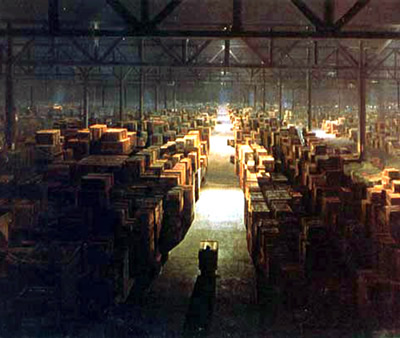
And on that note, here are some surreal photos I found on Imgur of Amazon Fulfillment Warehouses:


Ok, that last one was from Raiders of the Lost Ark. I couldn't resist.

Unfulfilling... Is FBA for you?


Strictly business.

It seems like almost every blog or book I've read that offers advice on how to make money selling items on Amazon cannot stop saying great things about Amazon's FBA (Fulfilled By Amazon) service. They freaking love it and they are sure that you will too.

If somehow you haven't already been innundated with emails promoting FBA, let me give you a quick overview:
As a regular Amazon merchant, you basically list your products on Amazon's site and Amazon handles the transaction for you (for a fee, of course). You then pack and ship the product to the buyer, handle any returns or problems, and Amazon pays you out (minus their fee, of course) every two weeks. You also get a predetermined amount for shipping costs that the buyer pays. Basically, Amazon's Marketplace acts as the forum for you to display your products (for a fee). All clever comments in parenthesis aside, I personally think that their fees are reasonable considering they provide my items access to millions of potential customers that I never would have had otherwise.

But with FBA, you pay to ship your products to an Amazon fulfillment center, where they then handle the storage, packing, and shipping of the items to the customer. The idea is that you no longer have to deal with customers or shipping hassles. Another promoted bonus is that your sales are expected to rise both by your association with Amazon's brand, as well as the fact that your items now qualify for the free shipping offered to Amazon Prime customers and all that.
So basically, with FBA, all you do is Find Product, Send to Amazon, Get Paid, and Repeat... What could possibly go wrong?

Apparently, plenty. In fact, there is an entire blog devoted to the how FBA will destroy your business.

The main liabilities with FBA are also presented as its main assets... you no longer are dealing with your own inventory and shipping. While this is could be great in terms of your storage, organization, and time constraints, this also takes a lot of control out of your hands.
  • What happens if a seller has a question about the condition of a specific item? Once your inventory is in Amazon's warehouses, you cannot actually look at them again.
  • What happens if Amazon screws up and order? Here is the biggest problem. If Amazon damages an item or mispacks an order or otherwise screws up, you are still on the hook. Your merchant account will be the one getting the bad feedback. You will be the one paying for any refunds. Amazon controls your products and your service, but the customers will be contacting you about problems. Even though  Amazon claims that they will rectify any problems like this, there are reports to the contrary
  • Do I still collect the shipping costs that customers are charged? Nope. If you are a merchant who enjoys the extra change leftover from the difference between what the customers are paying for a book (usually $3.99) and the actual costs of shipping (averages about $3.09), then you are out that money with FBA.
  • What at are hidden costs? And now things get hazy. The many proponents of FBA rarely discuss fees. Amazon's information pages about FBA do contain fee information, but it is pretty much buried in promotional rhetoric and positive testimonials. Apparently there are other passive fees (such as restocking, oversized items, and variable storage fees) that aren't very clearly explained at all. Clearly, a seller needs to be very aware of their inventory, its weight, its "shelf space", and the average turnaround time in order to get a clear picture of the risks of FBA fees.
My thoughts? I'm somewhere in the middle. While I'm very suspicious about the near-constant sales pitches and unquestioning endorsements from other Reselling Blogs telling me how great FBA is, I'm also not convinced that FBA is just a scam to increase your fees and ruin your reputation. Clearly, Amazon benefits from FBA (otherwise they wouldn't promote it so much).
The question isn't whether FBA is good or bad; The question is whether the FBA system works for you.

For me, it does not. While FBA might slightly increase my sales, the likely increase in fees would not make it worthwhile. My Part Time Picking operation is a pretty small one. My storage and shipping situations are pretty streamlined, and my inventory is manageable. Plus, I like being in control. I get very stressed and frustrated when I'm not able to directly handle problems with customers.

So when would FBA be the right choice? My feeling on this is that you should seriously consider switching to FBA when you are seriously considering hiring someone to help you with your Picking business. If your operation is large enough that you are renting storage space and hiring someone to help with the packing of your orders, you should give FBA some consideration. It is likely that having Amazon act as your storage and fulfillment center actually is more economical (and simpler) than expanding your business the old fashioned way. But if you, like me, are a pretty smooth one-person operation with no needs for extensive storage or shipping help, Fulfilled By Amazon likely isn't for you.

So what do you think? Have you switched to FBA? Get in on the conversation by leaving a comment.

Having a Laugh

More fun than a basket of baby blossoms. 

I recently had a good laugh at some of the featured articles over at Cracked.com that I thought I might share. Laughing is good.

If a lack of good picks has got you down, check out this list of the 10 Most Absurdly Expensive Products on Amazon.com, as compiled by internet comedy genius Seanbaby. Maybe it'll inspire you to sell your own copy of the Bloodsport Movie Soundtrack CD for $97.00.

Or perhaps those penny sellers are crushing your margins. Why not take five minutes to get inspired by 8 Ridiculous Products for Sale on Amazon (for One Penny).

And no link-dump of Amazon related Cracked posts would be complete with all the awesome compilations of Sarcastic Reviews of Stupid Amazon Products. And then Part 2. And then Part 3.

See, the internet is good for more than just reselling junk and then writing an inconsistent blog about it.


Dude, Where's My Feedback?

Holy Bible in "Like New" condition with only slight storage wear.

Previously on Part Time Picker, I regaled you with a terrifying tale of my recent run-in with neutral feedback on my Amazon merchant account. After much denial and resentment, I finally arrived at the conclusion that the source of my dissatisfaction wasn't that somebody had left me less-than-positive feedback (although I admit to no wrongdoing and never will). The problem lies in the fact that very few customers leave feedback at all on Amazon.

I estimated that maybe 1 out of 9 customers leaves feedback. I've been checking the forums and I see that while my ratio seems lower than normal, many are observing a downward trend in feedback left. If one negative or neutral feedback gets in the mix, it can really create an appearance of an unrealistic percentage of unhappy customers. I'll say it again, I'm getting screwed by the system!

Why is this? Why do buyers on eBay leave feedback more often than Amazon? I think it is because eBay has always been a business based on independent merchants, while Amazon introduced outside merchants into its system well after establishing itself as a online retailer. When something is bought on eBay, it is well understood that it is not eBay itself that is selling the item. Perhaps many shoppers on the Amazon Marketplace don't understand that they are not actually buying their item from Amazon, but rather through Amazon. More thoughts here.

eBay has gone to great, even annoying, lengths to remind buyers to leave feedback. While Amazon constantly reminds us sellers about the importance of good feedback, but then it doesn't seem to remind the buyers quite so adamantly.

So what can we merchants do? We can send the buyers an email, through Amazon, to request feedback. I've done this a few times when I've felt like I was being especially ignored and deserving of some publicly proclaimed positive reenforcement. But check out some of the responses in this Amazon forum thread about feedback...
Some suggest that an email requesting feedback is enough to prompt an otherwise dormant buyer into leaving negative feedback. Careful when you ask for feedback... you may get it.

One thing is certain, if you are going to request feedback, make sure to explicitly state that the buyer is under no obligation. Never offer any kind of discount or refund in exchange for positive feedback (or the removal of bad feedback). Keep it quick, keep it friendly, and then leave them alone.

Perhaps an even better email to send is just a basic follow-up on the order. You're just checking in with the buyer to make sure everything is all right. And, oh, by the way, here is a link where you can leave me positive feedback.
You can do this in an even less intrusive way by including a note to this effect in the package. I find this very ineffective, because unless someone is opening their package right next to a computer logged into Amazon, rarely is the reminder transferred from the paper to the browser. There is a big difference between a clickable (or copy/paste-able) link and someone having to type it in manually.

Honestly, after all this writing and thinking about it, my best advise is to just let it go. Do your best to give the best customer service you can. Describe your products accurately and be honest. When things inevitably go awry and it isn't your fault, just chalk it up to the Part Time Picking game and move on. It's good to apologize for any mistakes or oversights you may have made (even if you don't think you are to blame) and communicate with your customers, but sometimes life isn't fair, and there just isn't much you can do.

You'll feel better once the next positive feedback comes in.
I know I did.

Arrgh... Neutral Feedback!

Be more constructive with your feedback.

The other morning I awoke to a shocking discovery... somebody had left neutral feedback on my Amazon merchant account. They thought that the book they had received wasn't in the described condition. While I might beg to differ, it really doesn't matter what I think, the damage is done.

I wasn't contacted before this feedback was left, and other than sending an apology, there is not much I can do. I would have gladly provided a partial (or perhaps even full) refund to avoid bad feedback, but at this point that would be considered a bribe and is explicitly forbidden. You do not want to risk upsetting the Amazon gods by attempting trade money or product for feedback.

When I saw that grey number 3 (instead of a beautiful green number 5) in my feedback score I felt angry, betrayed, and hurt. These emotions are all completely unjustifiable and I soon got over them, only to be replaced by feelings of embarrassment and frustration. Embarrassment because I likely overestimated the condition of the book I sold. That one is on me. Frustration because the Amazon feedback system is very important to merchants like me, but rarely utilized by Amazon customers. I'm getting screwed by the system.

Unlike eBay, Amazon hasn't built a culture of feedback for independent merchants. Ask anybody giving advice on how to make more money on your items, and they'll tell you to "have a great reputation." The feedback (and star rating system) is basically your only means of gaining a reputation. The problem with this system arises when customers aren't encouraged, and then don't know how, to leave feedback.

I estimate that, for me, only about 1 in 9 successful transactions results in feedback. Maybe less. So even though I'm selling 30-40 books on Amazon every month (a small amount in comparison to others), I'm still only getting 4 - 5 feedback ratings for those sales. It has taken me several years to get over 100 feedbacks (with my "feedback percentages" continually changing because those are only based on the feedbacks of the previous 12 months).
Somebody looks at my feedback and thinks I've only complete about 100 transactions, and I want to shout that I've got nearly a thousand happy customers under my belt. Unfortunately most are happy but silent.

Things have the potential to get ugly. Just as an unhappy customer in the tangible shopping world is more likely to tell his or her friends about a bad experience than a happy customer would of a good experience, an unhappy customer is a lot more likely to take the initiative to navigate the feedback system to leave negative, or neutral, feedback. And let's face it, anything but positive feedback is considered negative.

Do the math and cringe. I could complete 99 successful transactions, but I'd likely only see 10 customers leaving feedback. Then, if one order goes awry, I get a negative feedback (which I probably deserved). While I'm posting a solid 99% success rate in the real world, my feedback score has me around 90%. It looks like I'm screwing up one in ten of my orders!

The problem isn't unhappy customers leaving feedback, the problem is happy customers not leaving feedback.

So what can we do about this?
Stay tuned, because my next post offers some strategies towards getting a little more love in the feedback area. I'll also probably complain about the system some more.

Shipment Tracking: Protection or Big Waste of Money?

It's every Part Time Pickers worst nightmare... you picked a great deal on some item, the bidding frenzy netted you hundreds of dollars, you ship the item promptly, but somewhere between here and there the item disappears. The buyer claims to never have gotten it. Potentially, you might have to give a refund and be out the cost of the item, the cost of shipping, the item itself, and you get some negative feedback for all your trouble. If only you had gotten tracking on you package, none of this would have happened.

Well, maybe, and maybe not.


Certainly, without tracking you are vulnerable to scams from a fraudulent buyer and confusion from the package carrier. With no record of where the package is during shipment, the buyer has no proof that you even sent the item in the first place. If a claim is filed against you as a seller and you have no tracking info, you will be forced to refund the buyer, and you should. This is true with eBay, Paypal, and Amazon.

But having the tracking doesn't necessarily mean you'll win the argument if a buyer claims their package never arrived. eBay's website claims: "Tracking information and Delivery Confirmation also protects you in the event of an eBay dispute and is one of the qualifications for getting an automatic 5-star rating for ship time.", but eBay is known for lousy customer service to both buyers and sellers, with many disputes resulting in automatic full refunds. You can scare yourself more by reading about one such occurance in this article about a 'buyer from hell' and the online auction service that was no help whatsoever.

And I can personally attest that Amazon will grant a full refund to any buyer who claims a package was not delivered, even if you have a tracking number that says it was. Apparently you need to get signature confirmation to even defend yourself to Amazon.
Once again, these policies are hard to locate on Amazon's website; but Basically, in regards to Amazon, the buyer is always right. This is great when you purchase items through Amazon, but can be a bit frightening when your are selling.

I usually ship most of my items through the USPS, so Delivery Confirmation (the cheapest form of tracking) will cost about 80¢ per item. Now, if this tracking doesn't actually protect me from claims that items weren't delivered, is it just a waste of money?

The answer is "probably". But, you know what, most of the time I get the Delivery Confirmation anyways. I want to give great customer service, and providing a tracking number is a big part of that. I have found that customers are much more patient when waiting for a shipping problem to resolve if they at least know the package was sent in the first place. There have been several times where I was very glad to be able to provide a tracking number to an impatient buyer.

When I'm buying and item on eBay or Amazon, I sure want tracking.

And if you purchase your shipping online, the cost of Delivery Confirmation is greatly reduced. With stamps.com, tracking is free with Priority Mail and First Class shipment, and just 19¢ for Media Mail and Parcel Post (not to mention the sanity saved from not having to wait in line at the post office).

So, while it may not fully protect you, I say go ahead and get the tracking.

Breaking the Code: Amazon Best Sellers Rank

Don't let Amazon's confusing Sales Rank system overwhelm you. Use it to maximize your picking power!

When I'm deciding whether or not to pick a book to later resell on Amazon.com, there are 3 major factors I regard.

  1. The current prices that the book is being offered for.
  2. The condition of the book.
  3. The Amazon Best Sellers Rank of the book (also known as the Sales Rank)
The first two are pretty easy to interpret. 
If I were to sell this book at the current lowest price being offered, minus what I'm paying for the book and any Amazon fees, what profit would I make? Is this book worth picking?
The condition of the book also affects how much it might sell for. Obviously, a book in "Like New" condition will likely sell faster, and for more dollars, than the same book with all kinds of damage.

But that third item, that Best Sellers Rank, that can be a bit more tricky. Amazon is secretive about the algorithm used to determine a book's rank, so exact statistics on the correlation between sales rank and actual number of books sold over a certain period of time can be hard to ascertain. One thing is sure, the lower the rank number (meaning the better the rank), the more popular that book currently is. A book ranked #20 is selling a lot faster than a book ranked at #2,000,000.

Doing some research on various blogs and forum discussions can give us a few estimations on sales and rank. An excellent thread from 2007 on the Amazon Seller's Forum gives us some estimates (although the popularity of Amazon and the number of products available has grown significantly since then). Other blogs, mostly aimed at authors who want to estimate the sales numbers of their own books, give us some other food for thought. 

A few things to keep in mind are that these are estimates and there are no guarantees. Books with astronomical rankings can sell surprisingly quickly. A book ranked towards the top of the charts can inexplicably stagnate on your shelf for weeks, especially if there are a lot of other merchant offering it. Whether we're talking baseball or book ranks, past performance is no guarantee of future results.

Because books with higher sales numbers have their rankings updated hourly, while books ranked in the millions are only updated monthly, you can see how these estimates can easily get skewed. Now factor in the idea that apparently Amazon has reintroduced the concept of "historical performance" to their rankings (something they removed back in 2005 or so), and you really can't pin down any exact numbers.

Fortunately, for the Part Time Picker's purposes, we don't need exact data, we just need some solid estimates to decide whether a book were considering is worthy of a pick. A higher ranked book, which is likely selling more copies, can also probably be priced a little higher. If a book is only selling once every year or so, you want to be the lowest price available when that rare buyer does show up. But if a book is selling dozens of copies a day, having the absolute lowest price isn't as big of a concern.

Amazon has over 10 million books ranked at this time. A book gets a ranking by selling at least one copy. Books that have listings but have never sold any copies have no ranking. So even if a book is rank 9,000,000, it has sold at least one copy through Amazon before. 

So here is my own little chart of how frequently things might be selling based on rank. Combine this info with a book's lowest selling price and condition and you can make some educated guesses as to how quickly you can turn your picks into cash. 
Remember, when I'm talking about a book "selling once a week", I'm talking about combined sales from all Amazon merchants. Just because a book is selling a lot of copies, that is no promise that your copy will be among those sold. Your competing with Amazon as well as all the independent sellers.
  • Sales Rank #1 - 1000: These are the best sellers, likely selling at least 100 copies a day! The top books sell thousands of copies a day. These are usually very new releases and fetch decent prices, even in used conditions. If the price is right, books ranked this good usually sell the same day they are listed. However, these books aren't often found in the dollar bins at the thrift store.
  • Sales Rank #1001 - 100,000: These books sell several copies every day, on average. Some might sell as many as 80 a day. If a book has a rank below six digits, it'll likely move within the week, if not the very same day. Check that price, check the condition, and go for it.
  • Sales Rank #100,001 - 250,00: These books sell a copy every day or two. A lot of books in these rankings are over saturated on the Amazon marketplace, so make sure the lowest prices aren't too low.
  • Sales Rank #250,001 - 500,000: Books in this range probably sell once a week, give or take. Not the kind of book to put into deep storage, but don't expect a sale right away.
  • Sales Rank #500,001 - 1,000,000: Books ranked under one million probably sell at least once or twice a month. Books can fluctuate within the rankings pretty fast in this zone, though. Still a good score if the price is decent.
  • Sales Rank #1,000,001 - 2,000,000: For a lot of folks, if a book doesn't make it in under a million, it doesn't make the cut. For me, when a book is in this ranking (and above), I really start to factor how much profit is at stake. A book with a ranking over 1,000,000 will likely sit on your shelf for a month or more, so is it worth the storage space?
  • Sales Rank #2,000,001 - 5,000,000: These books likely sell only a few copies every year, if even that. At this point, a book should have a large monetary upside to compensate for the likelihood that you will be storing it for some time before any potential sale. For books with these ranking numbers I make sure my copy has by far the lowest price available. 
  • Sales Rank #5,000,001 - 10,000,000: Good luck with these. If it has a rank number, it has sold at least one copy (and with these numbers probably only one copy total) at some point, so there is hope. Books with rankings above 5 million are your big-money longshots, so make sure they are worth the patience and storage space they are likely to need. 
Again, these are just my own guidelines for my Part Time Picking business. Other factors should also be considered, such as how many other sellers are offering a book, your own storage availability, how often you might find books with great rankings, your feedback reputation, and how much profit is needed, per book, to be worth you time and energy. 

To Pick or Not To Pick

In our previous two posts, we've talked about where to find books to resell on Amazon.com, and what categories of books generally will net you bigger profits. Today I'm going to discuss my procedure for determining if a book is worth picking. To illustrate this process, I randomly chose a book that I recently picked and sold. I do not endorse, nor condemn, the contents of Clean & Simple Scrapbooking - The Sequel by Cathy Zielske. In fact, other than to inspect the condition of the pages, I didn't even read one word of the book itself. I did, however, make about $10 profit reselling a picked copy.

I'm perusing the bookshelves at my local thrift store and I see this book. It's a "How-To" book from a small publisher, so right there it fits into two of my general categories for a book worth investigating. The original retail price is $19.95, and it seems to be in excellent condition with no markings on the cover or pages. I've got high hopes for this one.

I use my iPhone to scan the barcode on the back of the book. I often use either the Amazon app (which was free), or the iBookSeller app (cost me $3). I like the iBookSeller app, because it not only gives me the lowest current New and Used prices for this book on Amazon, it also gives me the Bestseller Rank. If there is ever a problem scanning the barcode, I'll just enter the ISBN number manually. It's right there above the barcode.

It has been less than a minute since I first spotted this book on the shelf and I already know that the lowest price that is currently being asked on Amazon is $16. The thrift store is selling this book for only $3, so if I were to resell it on Amazon priced at the current lowest price, I stand to make $13! Oh yeah!

I also know that this book has a Best Sellers Rank (formerly known as Sales Rank) of # 479,593. While that might not initially sound very promising, keep in mind that there are over 10 million books ranked by Amazon. So, even with a ranking near half a million, this book is still near the top, rank wise. In my past experience, a competitively priced book rank below 1,000,000 will usually sell within a month or so, often much faster. 

So it looks like Clear & Simple Scrapbooking - The Sequel is getting the green light. I plunk down my $3 and take my book home. After carefully checking the interior and cover for any damage, I list it on my Amazon merchant account for $15, a full dollar below the current lowest price.

6 days later I get an email informing this book has sold. I ship the book, confirm the shipment on Amazon, and the money is put into my payments account for later disbursement into my bank account.

I wish I had simply just made $12 profit, but I still have to factor in Amazon's fees. Plus, there are shipping charges that I get credited with from Amazon as well as the actual shipping fees I have to pay to the Post Office. All said and done, I made approximately $10 with this book. Not bad.

The entire process probably took me about 20 minutes, including researching, listing, packaging, and shipping the book. I enjoyed my time searching for books in the thrift store, so I don't really consider that time a liability to be factored against my profit calculations. Everything is further complicated by the fact that I rarely list or ship books one at a time. 

I'll be dedicating future posts to some of specific topics mentioned here, like Best Sellers Rank, Amazon fees and shipping costs, and the various outlooks on putting a dollar amount your time picking. I hope this gives you a sense of how easy it is to make some side-cash selling books on Amazon.

What To Sell: BOOKS part 2

In the previous Picking post we talked about why reselling books through Amazon.com is an easy way to bring in some extra dough. We also mentioned some of the places to find books to sell. Today I want to give you a bit more insight into how to maximize your book picking practice.

Most of these books hold more value as potential recyclable paper than as publications for sale.

With no prior experience selling books on Amazon, one might think that the best books for picking are all the best sellers and popular book, many of which have been made into popular movies. These are the books that have sold millions of copies, many at a full retail prices hitting up to $29.95. Logically, these should be easy books to make a few bucks with. Wrong!

The problem is over saturation. With millions of copies of these books currently in circulation, there are thousands of second-hand booksellers on Amazon competing to sell their copy. This competition drives the asking prices down... way down. Often times it drives the price to a penny for the book. I'll devote another blog post soon to "Penny Books" and how large sellers can squeeze tiny profits from these sales (hint: it's the shipping charges).

Take a look at the Amazon page for The Da Vinci Code. There are over 5000 merchants offering used copies of this book! Hundreds of these folks are selling this book for just 1 cent. Heck, some of them are offering this book at a loss when you factor in the Fulfilled By Amazon Free Shipping. And this is just for the hardcover edition.
Trust me, you don't want to get into the penny book game. You will lose.

With the exception of newly released Best Sellers, you are rarely going to find a popular book that you can squeeze any real profits out of. There are just too many copies available. This doesn't necessarily mean that you should only pick rare, obscure books. I'm just saying that your first edition of The Sisterhood of the Traveling Pants ain't worth squat. Sorry.

So what books are worth picking? And how do I know at a glance if a book will make me a profit? I don't. But my iPhone does. I use some general guidelines when deciding which books are worth investigating, and then I let a scanning app give me the pertinent information. From this info, such as lowest price currently offered and sales rank, I can decide if this here book is indeed worth picking.

The general categories of books that might have higher resale values include:

  • Textbooks and unused workbooks
  • Teacher's books (not textbooks, but books on teaching and such)
  • New age books (this includes yoga, mediation, and books by any "guru")
  • Art and photography books. Also books on art criticism
  • Cookbooks
  • How-To books
  • History books
  • Transportation books (motorcycles, boats, trains, etc.)
  • Sports books
  • Audiobooks on CD
  • Best sellers from the past 12 months, another older is likely already over saturated
  • Any books published by a University
  • Any books from smaller, independent publishers.
These last two categories are crucial. A lot of books from school presses and small publishing companies are on very specific topics. This gives them a limited appeal in the brick-and-mortar thrift store context, but can make them quite valuable when available to a global market on the internet. 

Looking up info on every book you see isn't very practical and can be downright discouraging. By narrowing your vision you'll be more likely to find the gold in the shelves with less effort. There are always exceptions to the list above, but if you pay attention to what types of books your able to sell, and for how much, your eye will soon be drawn to the cream of the crop when you're out picking.

So now you know where to find books you can resell on Amazon, which books are likely to bring you resale riches and which will get you little more than papercuts. 
Tune in next post, where we'll talk about how to use your scanned book data to decide which books to pick. 


What To Sell: BOOKS

"What To Sell" is an ongoing series of posts that examine different categories of items that can be picked cheaply and then sold online. For this first article, let's examine one of the most common genres of resale items you'll find both online and in stores... books!

There's gold in them thar shelves!

The other night I was walking home from the liquor store, as I often do. On the sidewalk in front of a neighboring apartment building was a couple boxes and some broken shelves that had an affixed sign that read "free". The boxes were filled with books, most of which didn't interest me. But at the bottom of the box, beneath the usual old thesaurus and Opera Book Club dregs were a few textbooks. A quick check on my iPhone and, sure enough, I'm walking home with a few dscarded books under my arm. By the end of the week, I've sold all three books I grabbed for a total of $45. Researching these castaway books took me all of 90 seconds (including the ones that weren't worth taking). The profit margin was 100%. And this isn't even an exceptional circumstance... I find free or cheap books to resell all the time.

The reason I'm able to decipher which books are worth picking and trying to sell and which to pass up is because I can research them quickly with my smart phone. I use apps and my phone's camera to scan the barcode (or manually enter the ISBN or title) and get quick information on what a book is being sold for by others online.

I have found books to be one of the easiest and hassle-free items to quickly flip online. Almost all the books I resell are sold through Amazon.com. Amazon takes a decent cut, but I feel it they have earned it by providing a huge worldwide audience of potential buyers I would not otherwise have access to.
The book selling process is very simple:

  1. I scan books at various location to see if they are worth picking.
  2. I list the books on my Amazon merchant account.
  3. I update my listings so that my book is one of the most affordable on the site. But I always make sure that I'm still making an adequate profit.
  4. When the book sells, I package it up and ship it off.
  5. I count my money.
The good thing about Amazon is that they have millions of customers perusing their inventory (which includes the offerings of independent sellers like me) every day! The bad thing about Amazon is that I am competing with hundreds of other sellers, mostly on price. The competition to offer the best value on an item leads to ridiculous price reductions, with many popular titles being offered for only a penny. This is great if you are a buyer, but eliminates a lot of potential books to sell if you are a Part Time Picker like me.

So where do I find books to list on Amazon? Anywhere I can.
I routinely lurk all the locations where new inventory of second-hand books are being regularly offered. I check:
  • Garage Sales
  • Library Sales
  • Thrift Stores
  • Flea Markets
  • Used Book Stores (they often have a "dollar book" cart on the sidewalk)
  • Craigslist or Freecycle websites
  • even Dumpsters (especially near the college campuses when the semester ends)
Once you have them, books are pretty easy to resell on Amazon. Unlike eBay, you don't need to take photographs of your items or write a detailed description. You don't even have to figure out the shipping costs. Amazon handles it all. You just list the condition, give a brief (1 or 2 sentence) description of any flaws or noteworthy exceptions to your book, and set your price. Then, when the book sells, you ship it to the buyer and Amazon gives you the money for your book, plus money for shipping, minus their fees.

With the current widespread ownership of smart phones, why doesn't everybody sell books on Amazon?
Because, despite being so easy, it isn't so easy. Most books aren't worth jack squat on the Amazon resale marketplace. Some might have higher asking prices but aren't very likely to sell at any price for a long, long time. A few days searching and scanning books at random without netting yourself any cold hard cash can get discouraging. A few carelessly handled orders can result in enough negative feedback to scare off most potential customers. Being a Part Time Picker of books will require time, strategy, knowledge, organization skills, storage space, patience, and luck.

But don't fear. I've got lots of great tips and techniques for you that will help you shorten the learning curve and get you sitting pretty in no time. Stay tuned, because now that you know where to search for books to sell (see the list above), and where to sell them (Amazon.com), the next post will get even more detailed on my own personal techniques for picking books for part time riches.


Starting Out

It is easy to be a Part Time Picker. All you need to do is get some junk and then sell it to somebody else. Preferably sell it for more than it cost you to get it. No problemo.

An antique book by J.M. Barrie from 1912; is it priceless or is it worthless. 
Give me a smartphone and about 45 seconds and I'll let you know.

For the Part Time Picker blog, when I talk about "junk" to resell, I'm talking about mostly second hand goods. I started with mostly toys and other collectibles from my private hoarded stash. I would sell these on eBay or to other collectors via Craigslist. Soon enough I got myself an Amazon merchant account and started selling some of my books, CDs, and DVDs. Once I got my smartphone, everything was up for grabs.

With my iPhone, I was able to quickly research what a book was selling for online, and in other nearby shops. All I had to do was scan the barcode on the back. I also used other Apps for doing quick price research for items. I did quick searches of completed auction listings on eBay, or found other useful information with a Google search.

With my portable-internet-pocket-computer-phone, I expanded into selling a broader range of books and collectible items. Soon enough I was picking and selling used electronics, kitchen items, handbags and clothing, cameras, fabric, and even office supplies.

I'm not interested in Full Timing. I'm fortunate to enjoy my "day job", even if it isn't making me rich. I want to look at my side business as a fun option, not an obligation. I want to do it when I want for extra cash, not as my sole means of support... That would be too stressful.


I'm also not interested in sourcing wholesale, drop-ship, or imported items. Don't get me wrong... there are many successful folks out there who use an eBay store or an Amazon account as a storefront. I have very little experience or interest in managing that type of business. Like most people, I have limited time and space to be doing something I'm not very interested in.


What I'm into is searching the neighborhood thrift shops, flea markets, and garage sales for my inventory.
If you don't enjoy the thrill of the hunt, picking might not be for you.
If you would rather stay behind your desk than get dirty on the floors and in the crates, you should look into finding some low-margin / high-volume product and hope no one else can get it cheaper.
I'm into collecting things and learning about them.
I'm into finding the big score.

Oh, I'll sell new in-the-packaging items when I can find them, if I come across them through my usual rummaging. If I'm really low on inventory I might even hit the outlet stores and discount shelves. The same Part Time Picker concepts apply, just generally lower profit margins.

Now, there are a lot of books out there that tell you all the "secrets of selling on eBay" or about becoming a "millionaire home bookseller", and I've read most of 'em. While there are certainly a few good tips and observations, these books are mostly obvious (and often outdated) instructions on the basics of eBay or Amazon with hardly any "secrets".

Now, I know I don't have to tell you about the basics of how eBay auctions and Amazon sales go. But if you're a little hazy on the topics, or if reading this blog is literally your first step towards starting out, by all means, do your homework and build yourself a proper foundation first.

What you'll need is an eBay account that has been cleared for selling, a Paypal account, and an Amazon merchant account. I'm going to assume you already have a checking account and email.

If you don't have these things set-up yet, go ahead now. We'll be here when you're ready.
Here are some links to get you started:


Now, for the rest of us, it's time for the show...